
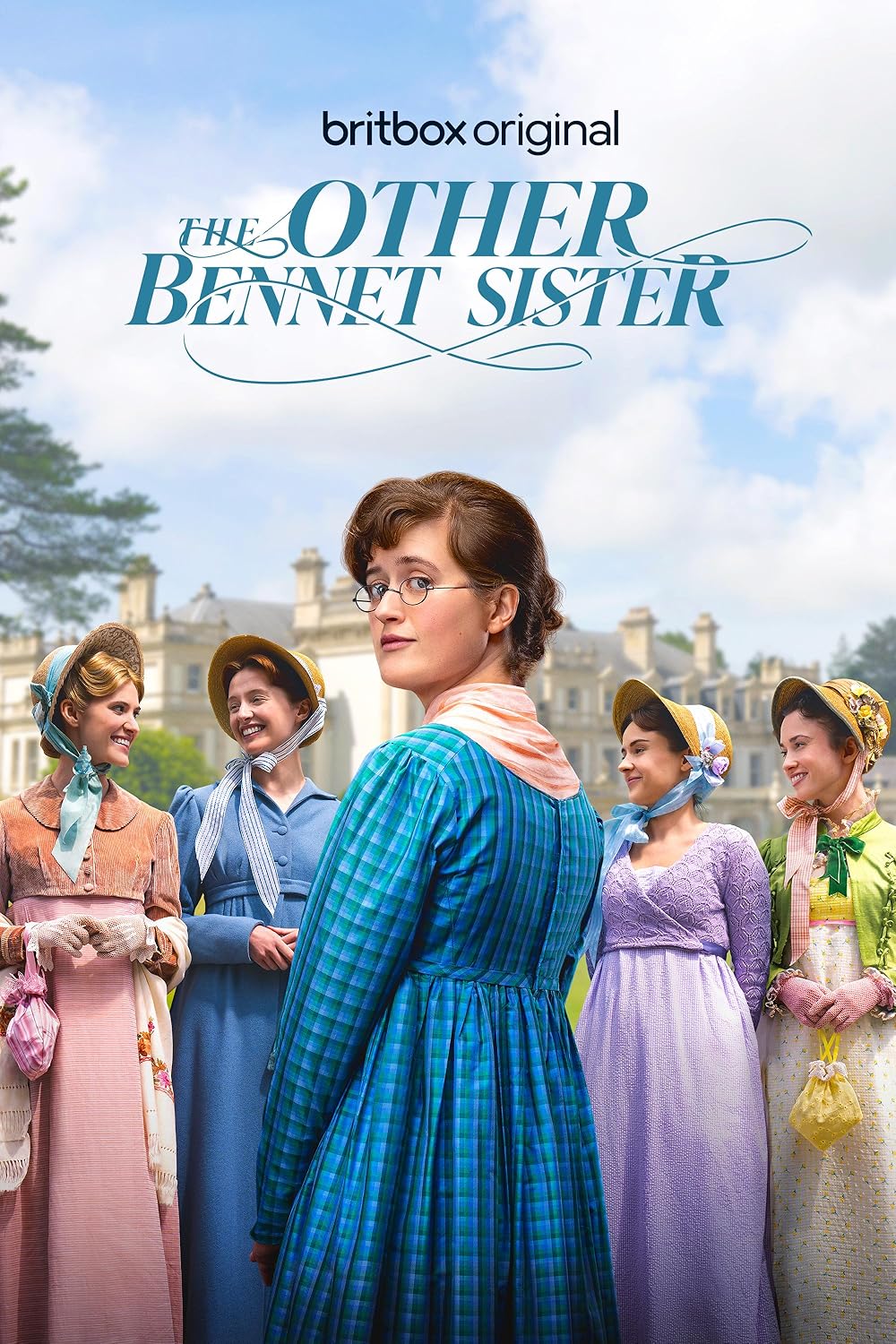
Series: The Other Bennet Sister
Episode: 1
Based on: The Other Bennet Sister by Janice Hadlow
Setting: Regency England
Main character: Mary Bennet
Mary Bennet has always been the odd one out in her family. While her sisters attract admirers and attention, Mary retreats into her world of books, facts and accomplishments, convinced that her knowledge might make up for everything that she believes she lacks.
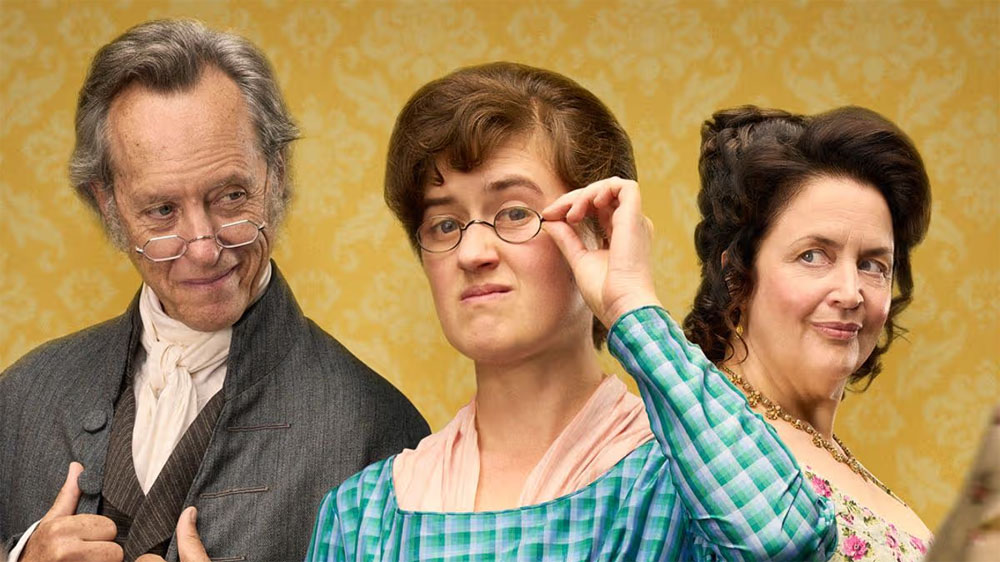
The other Bennet sister
At Longbourn, the differences between the Bennet sisters are impossible to miss. Jane is beautiful, Elizabeth lively and intelligent, while Lydia and Kitty throw themselves enthusiastically into society. Mary prefers books, music and serious conversation.
Unfortunately for Mary, her family rarely appreciates her efforts. Mrs Bennet is completely preoccupied with marrying off her daughters, while Mr Bennet treats Mary’s solemn pronouncements with amusement rather than respect. Mary has sadly learned to expect that when people look at the Bennet sisters, they will look past her.
A new pair of spectacles
Mary’s poor eyesight has not helped matters. When she finally receives spectacles, the world suddenly comes into focus , but so does her own reflection.
Rather than feeling liberated, Mary starts to feel painfully conscious of her appearance. Surrounded by attractive sisters, she has already absorbed the idea that beauty determines a young woman’s value, and the spectacles seem to confirm her fear that she will never inspire romantic interest.
Books and learning offer a safer world for Mary. Facts can be learned and mastered, but beauty or charm cannot.
The Meryton assembly
At the Meryton assembly, Mary once again finds herself on the edge of the social world her sisters seem to navigate so easily. Jane attracts Mr Bingley’s eye, while Elizabeth catches the attention of Mr Darcy.
Then something unexpected happens: John Sparrow asks Mary to dance.
A kind man, he is genuinely interested in her conversation and ambitions, and for perhaps the first time in her life Mary experiences what it feels like to have a young man pay attention specifically to her. Their conversation gives her a glimpse of a different possibility, and she momentarily thinks that maybe she is not destined to remain invisible after all.
Mrs Bennet intervenes
Mrs Bennet, however, does not share Mary’s optimism. Rather than encouraging Mary’s new acquaintance, she makes it painfully clear that she does not consider Mary an attractive prospect.
The interference devastates Mary because it confirms her deepest insecurity: even her own mother does not believe she is capable of attracting a husband.
John Sparrow disappears from Mary’s life, while the romances of her sisters move forward around her. Mary retreats again into the things she can control; books, music and constant self-improvement.
Mary reinvents herself
Mary decides that if she cannot be beautiful, then she will become accomplished. She practises music, reads voraciously and accumulates a of knowledge, hoping intellectual achievement will provide the distinction that her appearance has denied her.
But there is already a flaw in Mary’s plan. Much of her self-improvement is still designed to win the approval of other people.
She has not yet realy found out what she actually enjoys, what she wants from life or who Mary Bennet might be if she could only stop measuring herself against her sisters.
That journey is only beginning.
Historical notes
The Bennet daughters really do face a serious inheritance problem. Longbourn is entailed away from the female line, meaning Mr Bennet’s estate will pass to Mr Collins after his death rather than to his daughters. Jane Austen uses the situation to give Mrs Bennet’s obsession with marriage a very real economic foundation. Her fears for her daughters’ futures are real.
Dancing was an important part of courtship. Assemblies provided respectable opportunities for unmarried men and women to meet, converse and observe one another. Being asked to dance could therefore carry considerably more social significance than it would today. It was not a case of simply finding a partner for a few minutes.
Catharine Macaulay was an unusually bold intellectual model for a young woman. The eighteenth-century historian and political writer became famous for writing the multi-volume History of England and her arguments about liberty and education. Mary’s admiration for serious female scholarship therefore points towards possibilities beyond the conventional accomplishments expected of genteel women.
