
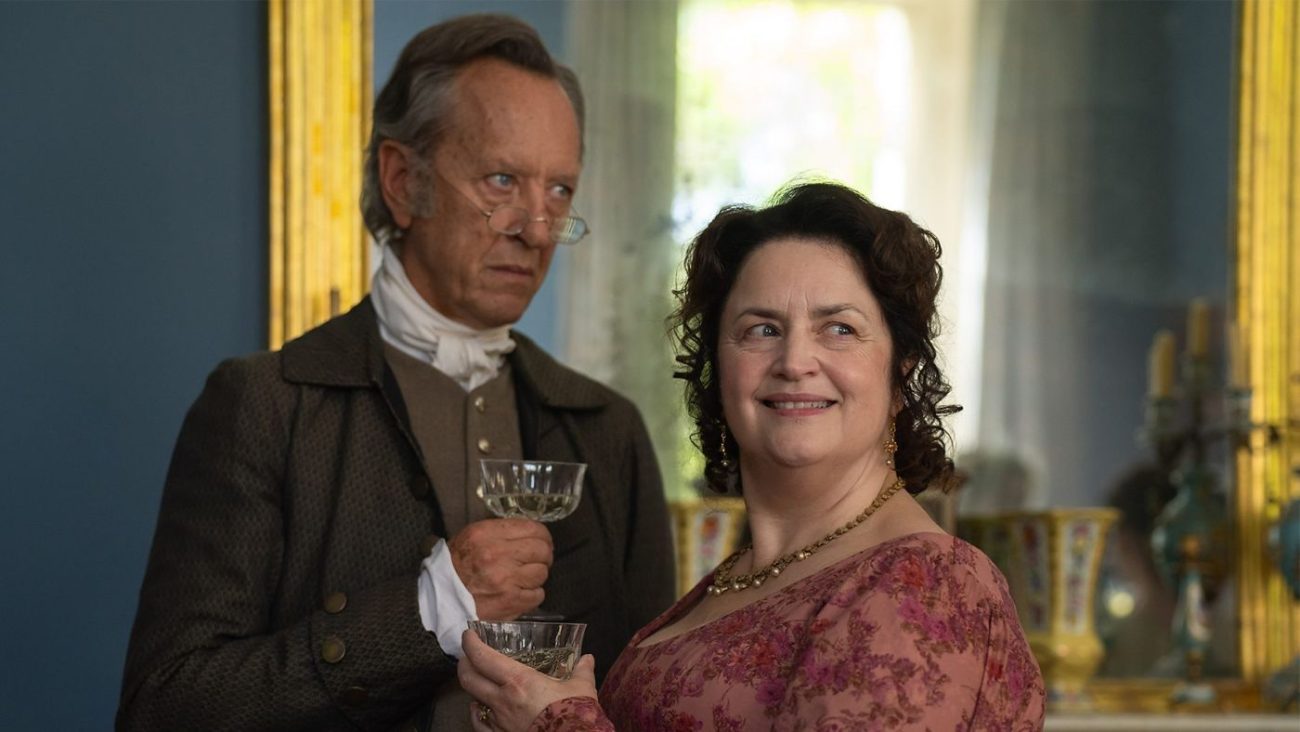
Series: The Other Bennet Sister
Episode: 2
Based on: The Other Bennet Sister by Janice Hadlow
Setting: Regency England
Main character: Mary Bennet
Mary Bennet’s determination to become a woman guided by reason rather than emotion is immediately put to the test when an important visitor arrives at Longbourn: Mr Collins.
Mr Collins comes to Longbourn
In the weeks after the humiliating experience at Meryton, Mary throws herself into her books. Her new philosophy is simple: think more and feel less.
Then Mr Bennet announces that his cousin Mr Collins is coming to stay. As the man who will inherit Longbourn, Collins is hardly a welcome prospect, although Mrs Bennet quickly realises that his visit might solve the family’s problem if he marries one of her daughters.
Mary refuses to condemn him before meeting him. When she discusses his arrival with Charlotte Lucas, however, Charlotte is considerably more practical. If Collins is looking for a wife, she advises Mary to think about the possibility.
Mary protests that she intends to remain unmarried and nobly devote herself to knowledge. Charlotte has little patience for the idea. For genteel women without independent wealth, she argues, there are few alternatives: “Marriage or misery.”
Mary finds something to admire
Mr Collins proves every bit as awkward as expected. He manages to compliment the Bennet daughters while inadvertently insulting Mary, admires the house he expects eventually to inherit and endlessly boast of how important he is.
But Mary sees something in him that her sisters do not. When Collins mentions James Fordyce’s sermons, she discovers that they do share a common interest. Later on, he praises her piano playing and her dedication to practice.
For once, a man appears to value the qualities Mary has deliberately cultivated.
Mrs Bennet quickly intervenes. She tell Mary that Collins is intended for Elizabeth, and Mary’s name has not even entered the discussion.
The Netherfield ball
The family travels to Netherfield for the ball, where Mary becomes increasingly conscious of Mr Collins. Charlotte encourages her to make herself noticed, and Mary decides to perform.
It goes disastrously wrong.
Mary sings “Begone, Dull Care”, but the performance drags on as her confidence deserts her. Lydia laughs, Elizabeth becomes aware that is not going well and eventually persuades their father to intervene.
Mr Bennet publicly stops Mary, telling her that she has “delighted us long enough”. Mary is mortified. Mrs Gardiner tries to comfort her, but Mary knows that everyone, including Collins has witnessed her quite public humiliation.
She later confronts Elizabeth for having prompted their father to stop her. Mary bitterly observes that Elizabeth seems to achieve everything effortlessly while she herself tries desperately hard and, even then, still fails.
Elizabeth refuses Mr Collins proposal
The following morning brings extraordinary news: Collins has proposed to Elizabeth — and Elizabeth has turned him down.
Mrs Bennet is furious with Elizabeth. Mr Bennet, characteristically, supports her with the observation that if she refuses Collins her mother will never see her again, while if she accepts him, her father will never see her again.
Suddenly Mrs Bennet remembers Mary.
She tells her daughter that Collins may now turn his attention towards her and demands a promise that Mary will accept him if he asks. Mary doubts he will ask.
Her mother delivers a devastating reassurance: “Who else will marry him?”
Charlotte makes her choice
Mary never gets the opportunity because Mr Collins proposes instead to Charlotte Lucas, who accepts.
Charlotte has done precisely what she advised Mary to do. She does not pretend it is a great romance. She has secured a home and a future and that will do.
Mary’s own position becomes increasingly uncertain as the Bennet sisters begin to leave Longbourn.
Then everything changes.
Mr Bennet suddenly collapses. As the household calls for a doctor, Mary realises that the security she has always taken for granted may be about to disappear, leaving herself and her mother with nothing but each other.
Historical notes
Why marriage mattered so much
Charlotte’s “marriage or misery” may sound deliberately harsh, but the economics behind it were real. Genteel women had very limited respectable ways of supporting themselves.
Jane Austen’s House notes that marriage could mean the difference between having a secure home and facing poverty, which helps explain why Charlotte’s decision to marry Collins is presented so differently from Elizabeth’s refusal.
James Fordyce and Sermons to Young Women
James Fordyce really did write conduct literature for women. The eighteenth-century Scottish clergyman’s writings instructed young women on appropriate female behaviour.
Austen herself makes Sermons to Young Women part of the joke in Pride and Prejudice: Mr Collins chooses it to read aloud to the Bennet sisters. This episode cleverly makes Mary the one sister who actually takes this sort of literature seriously.
What Mr Bennet’s death would mean
Mr Bennet’s collapse would have terrifying financial implications. The Bennet daughters cannot inherit Longbourn, so his death threatens not merely emotional loss but the loss of their home and principal source of financial security.
The situation has a real parallel in Austen’s own life. When her clergyman father died in 1805, Jane, Cassandra and their mother were left with limited means and became dependent on help from male relatives.
The Other Bennet Sister is available on BBC iPlayer in the UK and BritBox in the US and Canada.
