
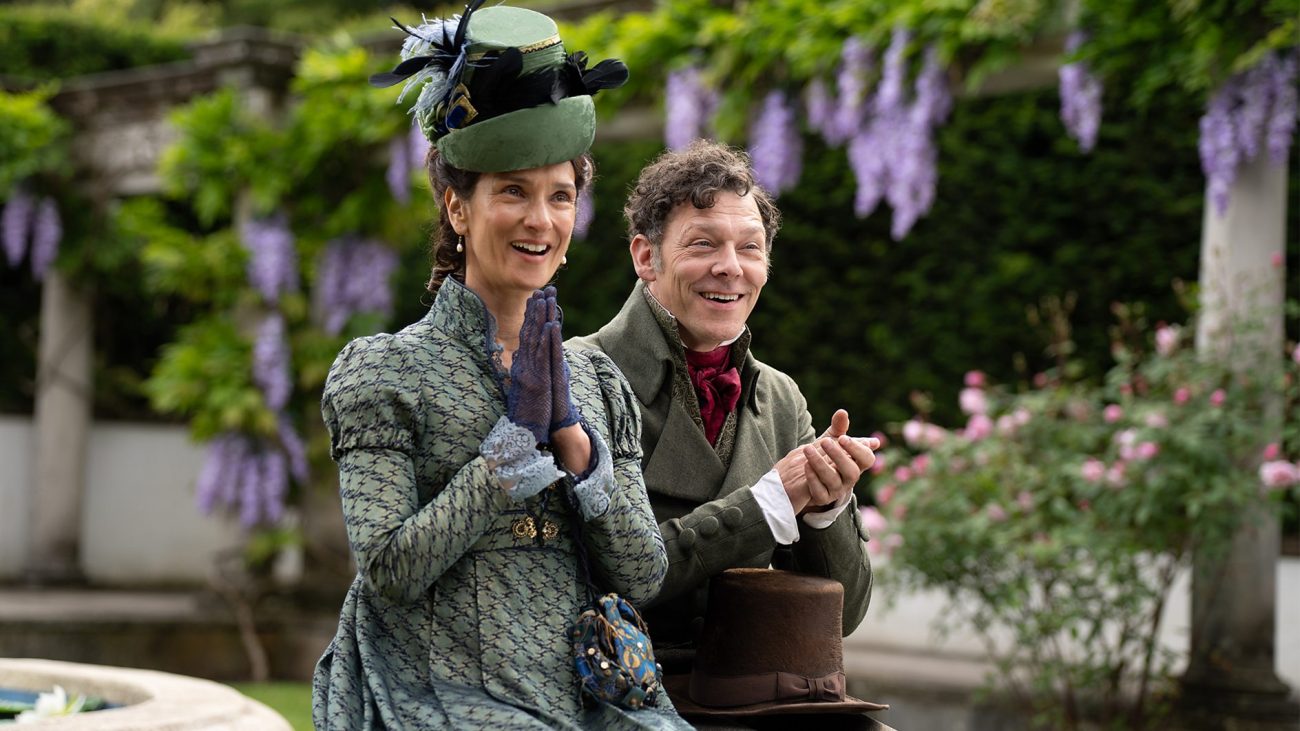
Series: The Other Bennet Sister
Episode: 3
Based on: The Other Bennet Sister by Janice Hadlow
Setting: Regency England
Main character: Mary Bennet
Mr Bennet’s death leaves Mary facing the future she has always feared. But being forced out of Longbourn unexpectedly gives her something she has never really had before: the opportunity to discover who she might be away from her family.

Goodbye to Longbourn
The episode opens in mourning. With Mr Bennet dead, Longbourn now belongs to Mr Collins. He and Charlotte arrive to offer their condolences and to make it clear that Mrs Bennet and Mary will have to leave. Mr Collins magnanimously gives them two weeks.
Jane invites her mother to live with her and Bingley at Netherfield and extends the invitation to Mary. But Mrs Bennet has already made other arrangements for her least-marriageable daughter. The Gardiners in London have temporarily lost their governess, and Mary is being sent to replace her.
She is horrified. As Mary prepares to leave the only home she has known, Hill encourages her. Mary knows plenty of facts; perhaps it is time, Hill suggests, that she learns something about people.
Mary becomes a governess
London proves immediately different. Mr and Mrs Gardiner welcome Mary warmly and introduce her to their three children: Marianne, George and Rebecca. Unfortunately, knowing things and teaching children turn out to be very different skills.
Mary launches into lessons that include natural selection, Christopher Columbus, revolutionary republicanism and the horrifying effects of smallpox. George falls asleep during one lesson and cries during another, while Rebecca simply disappears.
Mary’s first day might have been a disaster were it not for the arrival of Tom Hayward, a young barrister and friend of the Gardiners. He quickly joins the children’s games and, rather than laughing at Mary’s awkwardness, plays along with it.
A different sort of household
The Gardiners begin drawing Mary into family life. When the children play Graces, Mary initially refuses to join them because she is “not good at games”. Nobody seems particularly concerned whether she is good at it or not. For Mary, it is a small revelation.
Mrs Gardiner also insists that Mary join their social evenings rather than hiding upstairs with the children. Mary protests that she does not “sparkle at dinners”.
“In our house, no-one is obliged to sparkle,” Mrs Gardiner tells her.
She also persuades Mary to spend some of her governess allowance on new dresses. At the haberdasher’s, Mary meets Tom again. Confronted with wonderfully elaborate colour names including Corbeau, Nankeen, Gamboge and Drake’s Neck, he advises Mary simply to choose whatever makes her feel most like herself.
Mary picks crimson and spring green which is considerably bolder than anything her mother would have selected for her.
Poetry versus facts
Tom later visits the Gardiners and finds Mary attempting to play Graces. This time, she joins in. Their conversation turns to books, where they discover a considerable disagreement.
Mary dismisses poetry as “whimsy”. She has tried Cowper, Byron and Dryden but prefers histories and geology. Tom is appalled. Although the law is his profession, poetry is his passion, and he vows to find the book that will finally “open the heart of Miss Mary Bennet”.
Their easy conversation unsettles Mary in a way she does not entirely understand.
Mary’s new beginning
At the Gardiners’ soirée, Mary wears her new dress and meets Miss Baxter. Instead of treating Mary’s social awkwardness as something embarrassing, Miss Baxter finds it amusing. The two immediately recognise something of themselves in each other, and Miss Baxter offers to show Mary around London.
For perhaps the first time, Mary is making friends independently of her sisters. Then comes a disappointment. Mrs Gardiner introduces Tom Hayward and reveals that she and Tom have “something of an understanding”. They hope to marry the following year.
Mary hides her feelings. Of course, she tells herself, a man like Tom would already have secured a match. But the discovery doesn’t destroy her newfound optimism.
London has given Mary new clothes, new friends and new experiences. She is beginning to realise that change does not necessarily mean disaster. After only a week, she feels something she has almost forgotten: hope.
Historical notes
Life as a governess: Becoming a governess was one of the few respectable ways a genteel but impoverished woman could earn money. It could also be an uncomfortable social position. A governess was educated and respectable enough to teach the family’s children but remained a paid employee rather than a member of the family. Mary’s unusually warm treatment by the Gardiners is therefore important: they include her socially rather than simply sending her upstairs with the children.
Clothes and identity: Mary’s trip to the haberdasher reflects how important clothing was to identity and status. Regency women actively chose fabrics, trims and alterations, and Jane Austen’s own letters reveal considerable interest in buying, adapting and updating clothes. Dress could communicate wealth, fashionability and personal taste, making Mrs Gardiner’s instruction that Mary choose something she likes more significant than it initially appears.
Changing Regency fashions: Fashions changed considerably during Austen’s lifetime. The elaborate silhouettes of the later eighteenth century gave way to the high-waisted, relatively narrow gowns now strongly associated with the Regency period. Fashion therefore provides a neat backdrop to Mary’s transformation: changing her clothes is one visible part of learning that she does not have to remain the Mary Bennet her mother created.
