
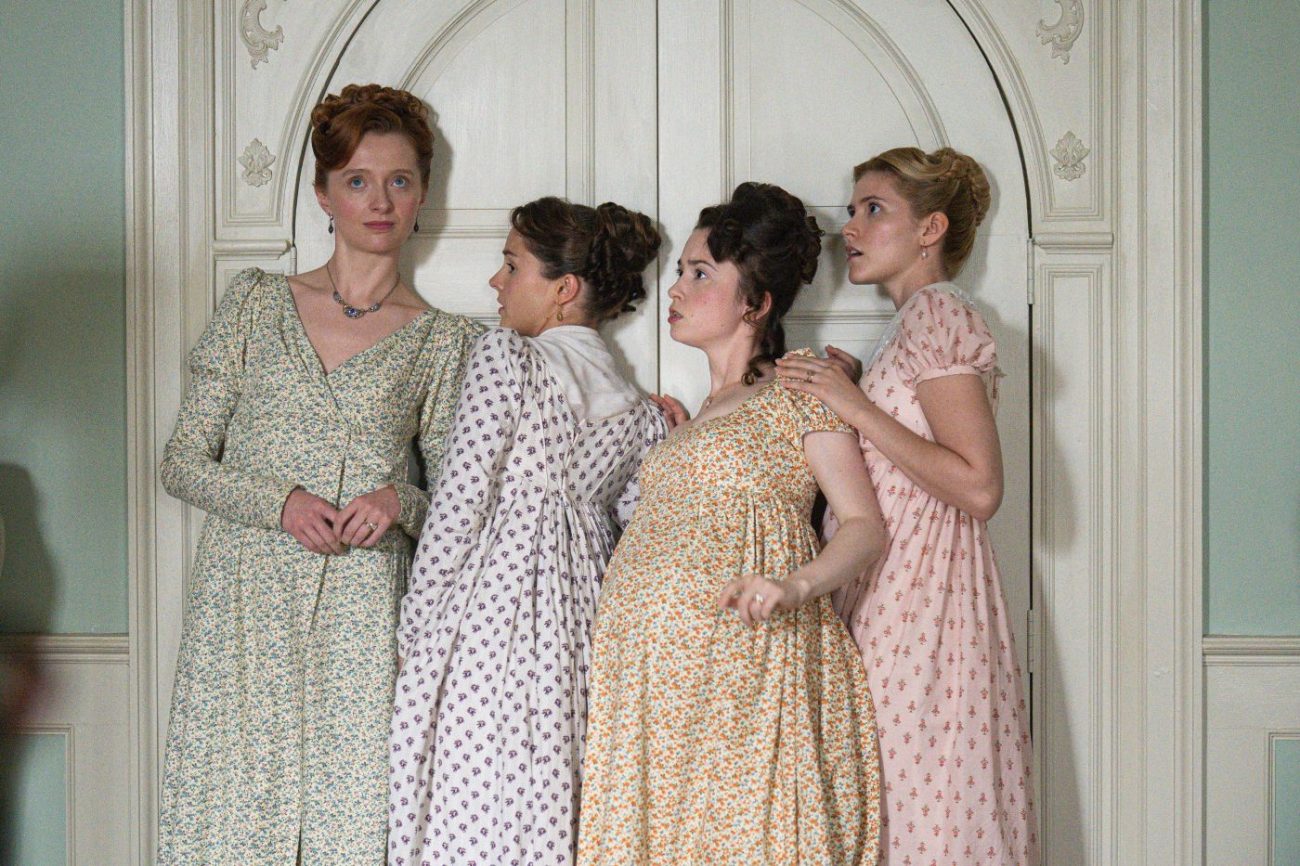
Series: The Other Bennet Sister
Episode: 7
Based on: The Other Bennet Sister by Janice Hadlow
Setting: Regency England
Main character: Mary Bennet
William Ryder has travelled to Pemberley with something important to tell Mary. With her mother already anticipating a proposal, Mary prepares herself for a declaration that could finally give her the security everyone believes she needs. What follows is rather more complicated.
William declares himself
William tells Mary plainly that he loves her. He admires her intelligence, her honesty and precisely those qualities that Mary spent years believing made her undesirable.
For Mary, it should be a triumphant moment. The Bennet daughter who once believed nobody would ever choose her has attracted a handsome, wealthy and eligible man. But when William asks whether she loves him too, Mary cannot give him the answer he wants.
She cares for him, enjoys his company and is enormously flattered by his affection. Love is another matter. William argues that happiness is there for the taking, but Mary cannot simply manufacture feelings because a marriage would be convenient.
Mrs Bennet sees an opportunity
Mrs Bennet is delighted by William’s interest and cannot understand Mary’s hesitation. From her perspective, the matter is straightforward. Mary has been offered precisely the future everyone once assumed would be beyond her reach.
Mary’s sisters are more sympathetic. Elizabeth in particular understands that gratitude and affection are not the same thing as love. Having once refused Mr Collins despite the financial advantages of marrying him, she is hardly likely to tell Mary that security alone should determine her choice.
Mary now faces the same fundamental question Elizabeth once confronted: is a respectable proposal enough?
Lady Catherine intervenes
William’s connection to Lady Catherine de Bourgh makes the situation even more complicated. Lady Catherine has never been known for keeping her opinions to herself, and Mary once again finds herself being measured against her sisters and reminded of her supposedly inferior attractions.
But Mary is no longer the woman who quietly accepted such judgements at Longbourn. Her time in London has changed her. She has friends, she has been admired, and she has discovered that people can find her funny and interesting.
Most importantly, she has begun to understand that other people’s opinions of Mary Bennet do not have to become Mary Bennet’s opinion of herself.
Mary makes her choice
William offers something extremely tempting. Marriage to him would mean wealth, independence from Mrs Bennet and the social security Mary has lacked since her father’s death. He genuinely likes her, and his affection is not based on turning her into someone else.
Yet something is missing. Mary finally accepts that she cannot marry a man simply because she is grateful that he loves her.
She refuses him.
It is an extraordinarily difficult decision because William has done nothing to deserve rejection. There is no Mr Collins-style absurdity that makes the choice easy. Mary simply does not love him enough.
William is hurt, but Mary has finally done something she could scarcely have imagined at the beginning of the series: she has chosen uncertainty over a respectable marriage she does not truly want.
What about Tom?
Mary’s thoughts inevitably return to London and to Tom Hayward. Her feelings for him are much harder to dismiss.
Tom challenges her, makes her laugh and introduced her to poetry when she believed herself immune to it. Unfortunately, he also has an understanding with Ann Baxter. Mary therefore has no obvious romantic future waiting for her.
But that is precisely what makes her decision important. She is no longer looking for a husband simply to prove that somebody wants her.
For the first time, Mary is asking what she wants.
Historical notes
The financial cost of refusing a proposal: Refusing a wealthy suitor could be a serious financial gamble. For a woman in Mary’s position, William offers far more than romance. Marriage could provide a home, income and long-term security at a time when respectable employment opportunities for women of her class were limited. Mary’s refusal therefore carries economic consequences that a modern viewer might easily underestimate.
A good match versus a good marriage: Jane Austen repeatedly explored the difference between a “good match” and a good marriage. Charlotte Lucas accepts Mr Collins because security matters more to her than romantic love, while Elizabeth Bennet refuses him. Austen’s novels repeatedly present women making different calculations involving affection, money, status and independence. Mary’s dilemma deliberately places her within that tradition.
Rank and social status: Lady Catherine’s obsession with rank reflects a society acutely conscious of social distinctions. Regency Britain did not operate according to a simple aristocrat-versus-commoner divide. Birth, property, profession, family connections and wealth all affected status. A prosperous gentleman might be wealthy without possessing aristocratic rank, while trade connections could still attract snobbery from families who considered themselves socially superior.
Where to watch The Other Bennet Sister
The Other Bennet Sister is available on BBC iPlayer in the UK, BritBox in the US and Canada, and BINGE and Foxtel Now in Australia. Availability varies in other countries.
